Easy Crochet Wave Stitch Dishcloth: Free Step-by-Step
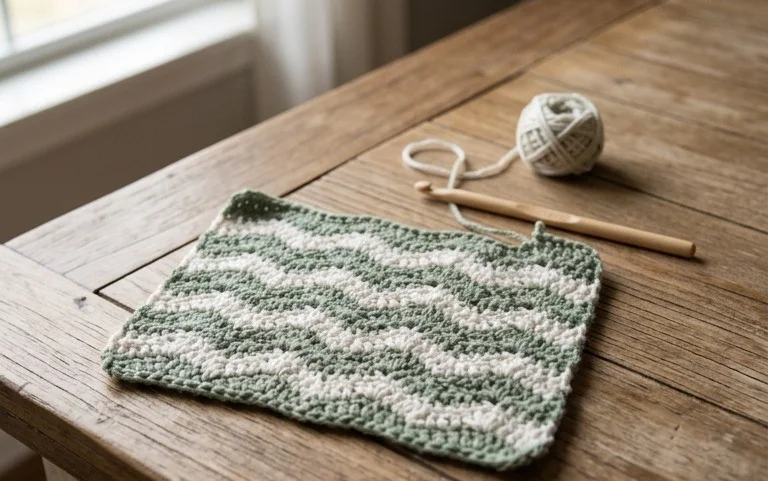
This gentle rhythm of rising and falling loops results in a ripple effect that is as satisfying to hook as it is useful in your kitchen. The soft ridges provide just enough grip for washing glassware without being abrasive, while the fabric remains light enough to dry quickly between uses. You will learn to manipulate height through simple stitch placement, creating a clean flow that looks intentional and tidy. Beginners often appreciate how this project builds confidence by repeating a simple sequence, making it a reliable choice for your next quiet afternoon session or thoughtful handmade gift for a friend.
Why You’ll Love This Pattern
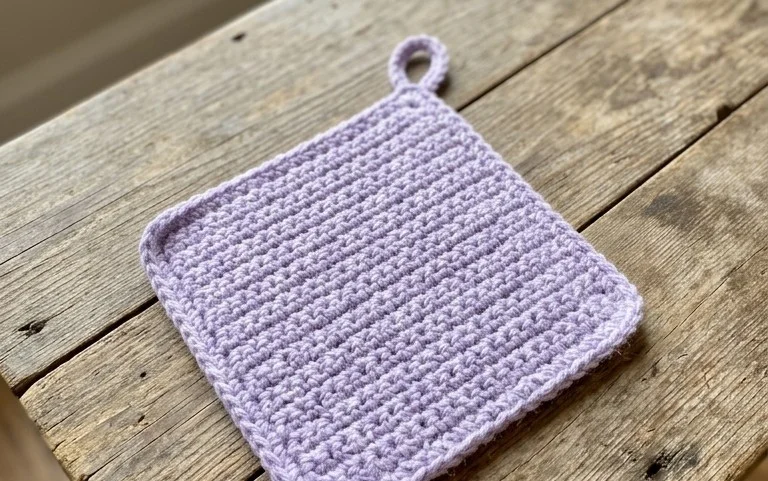
This classic crochet dishcloth is designed using the linen stitch, which creates a dense yet flexible fabric perfect for scrubbing or light cleaning. The alternating pattern of chains and single crochets produces a beautiful woven texture that holds up well under repeated heavy-duty use. It is an ideal project for practicing uniform tension, as the rhythm of the stitch remains consistent from start to finish. Because the piece is worked in a single rectangle, there is no shaping or complex assembly to worry about, allowing you to focus entirely on your rhythm.
I managed to finish three of these during a weekend trip. The texture is much thicker than a standard single crochet washcloth, and the edges stayed perfectly straight.
— Sarah, home crafter
Pattern Overview & Skill Level
- Skill Level: Beginner
- Approximate Time: 1 to 2 hours
- Construction: Worked in rows using a flat, back-and-forth technique with a simple turning chain process.
- Finished Dimensions & Sizing: Approximately 8 inches by 8 inches.
Materials & Supplies Needed
- Yarn: Worsted weight (#4) 100% cotton yarn, approximately 60 yards. Cotton is essential for dishcloths due to its absorbency and heat resistance.
- Hook Size: 5.0 mm (US H-8).
- Notions: Tapestry needle for weaving in ends, a pair of sharp scissors.
- Safe yarn substitutions: You may use a cotton-acrylic blend, though it will be slightly less absorbent than 100% cotton. Avoid wool or synthetic fibers like acrylic, as they do not absorb water effectively and may melt if used to handle hot cookware.
Stitch Guide & Abbreviations (US Terms)
- ch = chain
- sc = single crochet
- sk = skip
- st(s) = stitch(es)
- sp = space (the area created by the chain)
- Linen Stitch (Moss Stitch): A pattern of [sc, ch 1, skip 1] repeated across the row.
Step-by-Step Pattern Instructions
Dishcloth Base
The linen stitch requires an even number of chains to start. Follow these steps to build the square.
- Foundation: Ch 32.
- Row 1: Sc in the 4th ch from the hook. *Ch 1, skip 1 ch, sc in the next ch. Repeat from * across to the end. Turn. (15 sc, 15 ch-1 sps).
- Row 2: Ch 2 (counts as first ch and skip), sc in the first ch-1 sp. *Ch 1, skip the sc, sc in the next ch-1 sp. Repeat from * across, ending with a sc in the space created by the turning chain from the previous row. Turn. (15 sc, 15 ch-1 sps).
- Rows 3-30: Repeat Row 2 until the piece measures approximately 8 inches square.
Finishing
Once you reach the desired length, fasten off the yarn, leaving a 6-inch tail. Use your tapestry needle to weave the end back and forth through the base of the stitches on the wrong side of the fabric to secure it. Trim any excess yarn close to the fabric surface.
Care & Washing Instructions
- Machine wash your dishcloths on a warm cycle (up to 104°F) with like colors.
- Lay the item flat on a clean towel immediately after washing to prevent stretching or misshapen edges.
- Avoid using fabric softener, as it leaves a waxy residue on cotton fibers that significantly reduces their natural absorbency.
Pro Tips & Common Mistakes to Avoid
Maintaining consistent tension is the most important factor in keeping your dishcloth square rather than trapezoidal. If you find your edges are pulling inward, you are likely crocheting your chains too tightly; try moving up a hook size specifically for the foundation chain. Always use a stitch marker in the first and last stitch of every row to ensure you do not accidentally skip the final chain space, which is a common cause for losing stitches over time. Weaving in your ends by traveling through the stitches in multiple directions, rather than just pulling the tail through once, will prevent the yarn from unraveling during aggressive scrubbing. If you wish to make a larger cloth, simply increase your foundation chain by any even number, noting that you will require more yardage to complete the project.
Frequently Asked Questions
Can I substitute the recommended yarn for a different weight?
Yes, but it will change the finished dimensions. Using a lighter, DK weight yarn will result in a smaller cloth, while a bulky yarn will produce a much larger and thicker item. Adjust your foundation chain length to reach your desired width if you change yarn weights.
Why does my rectangle look like a triangle?
This usually happens when you miss the final stitch of the row. The linen stitch pattern requires you to work into the chain space at the very end of every row. If you consistently lose stitches, your piece will taper significantly as you work upward.
Is this pattern suitable for someone who has never held a hook?
This is a great beginner project because it uses only the most basic stitches. You will quickly learn how to manage tension and identify where to insert your hook, which builds the muscle memory needed for more complex projects.
Can I sell the dishcloths I make from this pattern?
You are welcome to sell physical items made from this pattern as long as you do not sell the pattern itself or use my photographs. It is polite to credit the designer when selling your finished work at craft fairs or online.
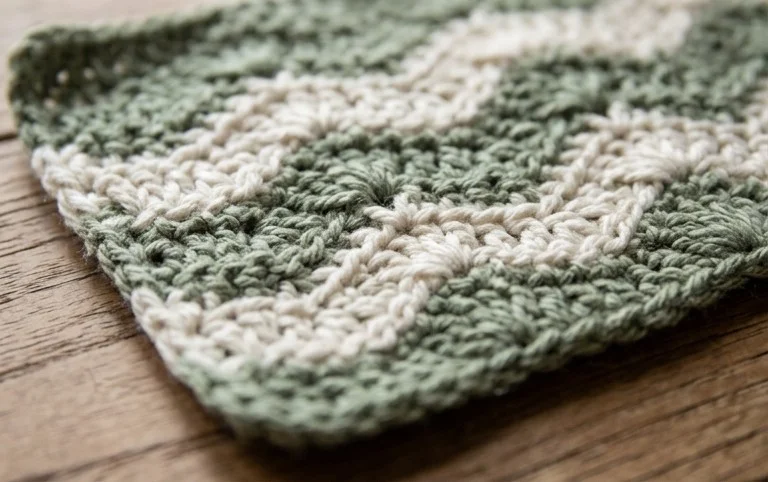
Your finished project now brings a touch of handmade texture to your daily chores while showcasing a professional ripple effect. You might experiment with a wider width to turn this design into a washcloth for the bath, or swap the cotton for a sturdy linen blend for extra scrubbiness. Tag your photos online so others can see how your color choices transformed the piece. Feel free to browse through the rest of the blog for more patterns that use this same repetitive, soothing construction method for your home.